How to Create Convincing Miniature Worlds with AI Images and Video
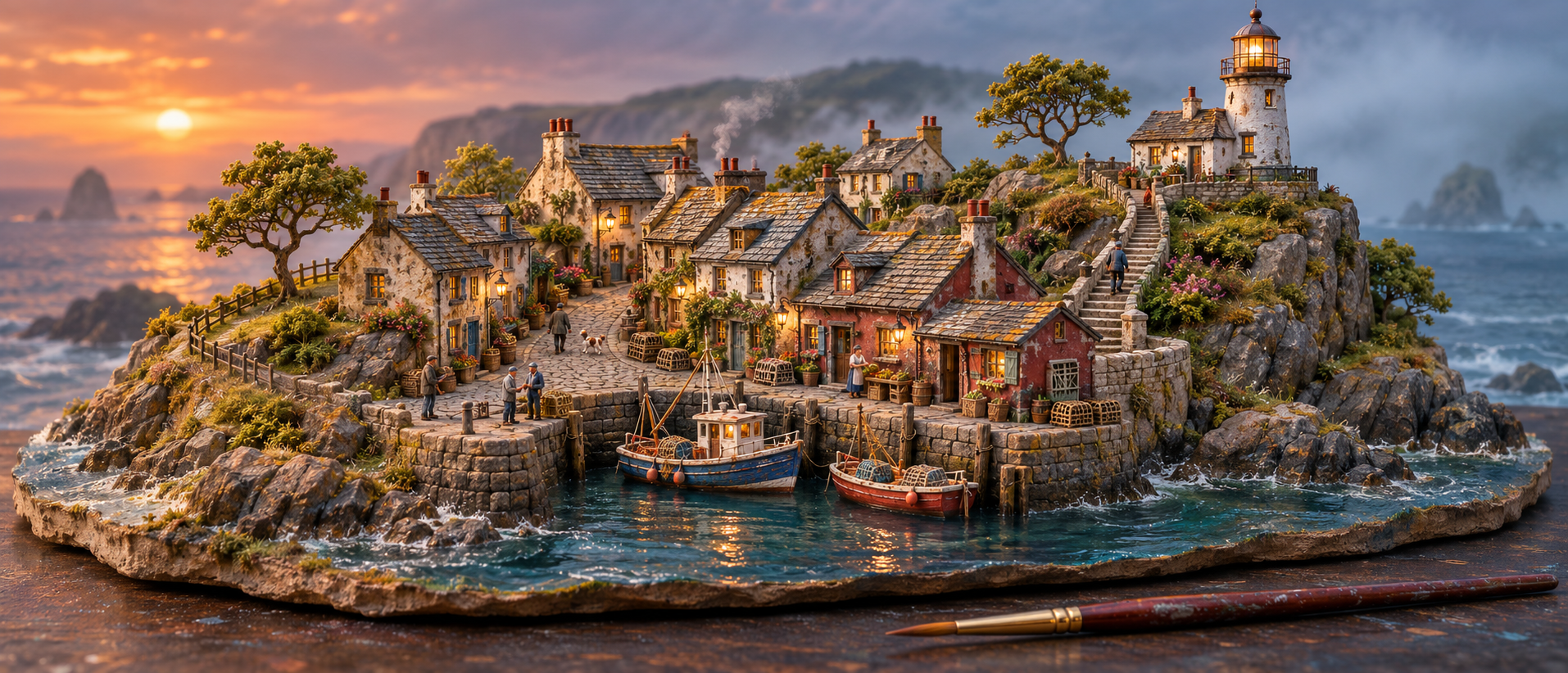
A railway station inside a suitcase. A greenhouse growing in a teacup. A repair workshop hidden beneath the keys of an old piano. Miniature worlds turn familiar objects into imaginative settings, making them especially rewarding subjects for AI image and video creation. Their appeal depends on a clear relationship between two scales: the everyday object we recognize and the smaller world built around it. When that relationship stays consistent, even an impossible scene can feel carefully constructed and believable.
The challenge is keeping the visual idea readable. A miniature scene can become confusing when tiny people vary wildly in size, staircases lead nowhere, or household objects lose their recognizable shape. Animation adds another layer of difficulty because movement can reveal spatial contradictions that a still image conceals. A useful workflow begins with a simple setting, establishes scale through familiar details, and introduces only enough action to bring the tiny world to life.
Choose a container with a recognizable silhouette. Start with an object that viewers can identify quickly: an open suitcase, a matchbox, a glass jar, or a desk drawer. Its shape should remain visible after the miniature environment is added. For a railway station inside a suitcase, preserve the handle, outer corners, hinges, and at least part of the interior lining. These features explain the concept without requiring a caption. If the station covers every recognizable detail, the image may read as an ordinary railway model.
Choose one main relationship between the container and the world. The suitcase might physically hold a model station, or it might open into a magical landscape that extends beyond its apparent depth. Both are valid creative directions, but they produce different expectations. Decide which interpretation you want before prompting. For a convincing tabletop miniature, keep the station visibly contained within the suitcase and show enough of the surrounding table to establish its size.
Use familiar objects as scale references. A tiny person alone does not explain how small a scene is. Place the suitcase beside a recognizable object, such as a pencil or a pair of reading glasses, when that supports the composition. Inside the miniature world, use doors, benches, and steps to establish a second set of size relationships. The viewer should be able to understand both the suitcase’s ordinary scale and the station’s reduced scale.
Describe these relationships directly. Instead of writing “an incredibly tiny railway station,” try “a model railway station fitted inside an open travel suitcase, with miniature passengers shorter than the suitcase latch and a pencil resting on the table beside it.” The comparison gives you something concrete to inspect. Treat it as creative guidance rather than a promise of exact dimensions, and review whether the generated proportions communicate the intended effect.
Build the scene around one main activity. Miniature worlds invite excessive detail. It is tempting to request a station, a market, a café, a bridge, a river, and a crowded festival inside the same container. Start with a simpler event: passengers waiting beside a small train. That activity gives the station a purpose and helps determine which structures are necessary. A platform, tracks, a shelter, and a few figures may be enough to tell the story.
Add secondary details only when they strengthen that event. A luggage trolley supports the railway setting. A small station clock provides atmosphere. A large fountain might consume space without helping the composition. Think of each addition as something that needs a believable location and a consistent scale. The more objects you introduce, the more relationships you will need to review before the scene is ready to animate.
Describe the layout before describing the style. Establish where the essential elements belong. For example: “An open brown suitcase sits on a wooden desk. A miniature railway platform occupies the back half of its interior. A single track runs across the front, with a small green locomotive beside the platform. The raised suitcase lid forms the background.” This gives the scene an understandable structure before you add lighting, materials, or atmosphere.
Then choose how the world should appear to have been made. You might request painted wood, paper signs, fine gravel, and hand-shaped clay figures for a crafted model. Alternatively, you could choose realistic masonry, metal rails, and lifelike passengers for a fantastical world. Keep the material direction deliberate. A scene that mixes obvious cardboard buildings with realistic human skin may work as a stylistic choice, but it should be a choice you intended.
Select a viewpoint that reveals the important relationships. A slightly elevated three-quarter view can show the suitcase exterior, the platform surface, and the train at the same time. A low viewpoint can feel immersive, but it may hide the container and weaken the miniature concept. A view directly from above can clarify the layout while concealing the fronts of buildings. Choose the angle according to what the viewer needs to understand first.
Keep the camera description consistent with the composition. If you need the entire suitcase visible, do not also request an extreme close-up of a passenger’s face in the same image. Create separate shots for those purposes. An establishing image can explain the whole world, while a closer image can reveal a tiny ticket window or a traveler holding a bag. Each shot should contribute information that the others cannot show as clearly.
Use focus to guide attention without hiding the concept. A softly blurred background can help separate a miniature scene from the room around it. However, excessive blur inside the suitcase may conceal the platform, passengers, or edges that explain the scale. Specify what should remain readable: “The suitcase rim, locomotive, and nearest platform figures are clearly visible, while the room behind the desk is softly blurred.” Judge the result at its intended display size.
A photograph-like miniature effect does not require every edge to dissolve into blur. Keep enough detail for the viewer to explore the world. If the main attraction is a network of tiny walkways, those walkways need to remain visible. If the appeal comes from a single carefully made locomotive, you can concentrate attention there and simplify the surroundings. Let the subject determine the focus treatment.
Inspect the world as if someone had to use it. Trace the path a passenger would take from the station entrance to the train. Do the stairs reach the platform? Do the doors open onto usable space? Are the benches sized plausibly for the figures? Check whether the track continues sensibly and whether the train fits beside the platform. These practical questions help you find contradictions that decorative detail can disguise.
Repair the most visible structural problems before animation. A beautifully lit station with a track running through a wall still contains an unresolved layout. If your tool supports local edits, isolate the problem area while preserving the approved composition. Otherwise, simplify the prompt and regenerate. Keep a short record of the details that must remain: suitcase shape, train color, platform position, and the number of prominent figures.
Animate one event within the miniature world. Once the still image works, choose a contained action. A station attendant might raise one arm, a platform lamp might turn on, or a small train might move a short distance along a visible section of track. Start with a fixed camera so you can assess the action without also evaluating a changing viewpoint. Avoid asking every passenger to walk independently in your first attempt.
A motion prompt could read: “The small green locomotive moves slowly a short distance to the right along the existing track. The passengers remain on the platform. The suitcase, desk, station buildings, and camera stay still. The locomotive keeps the same shape and size throughout.” This describes a specific event and the surrounding conditions. Review the clip against those instructions, especially where the wheels meet the rails and where the train passes nearby objects.
Make movement compatible with the available space. A train cannot travel far inside a short suitcase without reaching an edge or leaving the visible track. Plan where the action ends before generating it. A gentle start followed by a cut may serve the scene better than a long journey. For a figure walking across the platform, leave a clear route and keep the action brief enough that it does not require complicated navigation around several props.
Watch for changes in scale during playback. A figure may become larger as it moves, or a carriage may change length near an obstruction. Review the whole clip at normal speed, then inspect suspicious moments more closely. Compare the moving subject with nearby stationary features. The platform edge, suitcase latch, and station doorway can act as visual references when checking whether the miniature world remains consistent.
Use a short sequence to reveal the world gradually. You do not need one continuous camera move to show everything. Begin with a wide view of the suitcase on the desk, cut to the platform activity, and finish on a small detail such as a lit ticket window. Carry the approved colors, materials, and layout into each shot. This gives the audience both the pleasure of discovering the concept and the opportunity to notice its smaller stories.
The strongest miniature scenes reward attention without demanding that every surface be crowded. Leave a few quiet areas around the main activity, preserve the everyday object that establishes scale, and give each animated movement a clear destination. A carefully positioned suitcase latch, a believable platform, and one small departure can make an imagined world feel worth exploring.